A busy arrow puzzle can look like a tangle of lines. One arrow points toward another piece, that piece appears to be blocked too, and it’s hard to know where to begin.
The board becomes easier to understand when you look for relationships rather than isolated arrows. A blocking piece is not just an obstacle; it’s also a clue about what needs your attention next.
What Is a Blocking Pattern?
A blocking pattern is an arrangement in which one or more pieces sit in the paths of other arrows. Some patterns are simple: one piece blocks one arrow. Others involve several arrows waiting for the same piece to leave, or one arrow with multiple pieces in its path.
In Amaze Go, an arrow can leave when the straight path ahead of its arrowhead is clear. If another piece crosses that path, the arrow is blocked. Selecting it while it’s blocked costs a chance.
You don’t need to memorize names for every pattern. The useful habit is to ask: “Which piece is in this arrow’s way, and can that piece move?” If you’re new to the game, the Amaze Go rules and controls explain the basics.
How Arrows Prevent Other Arrows from Moving
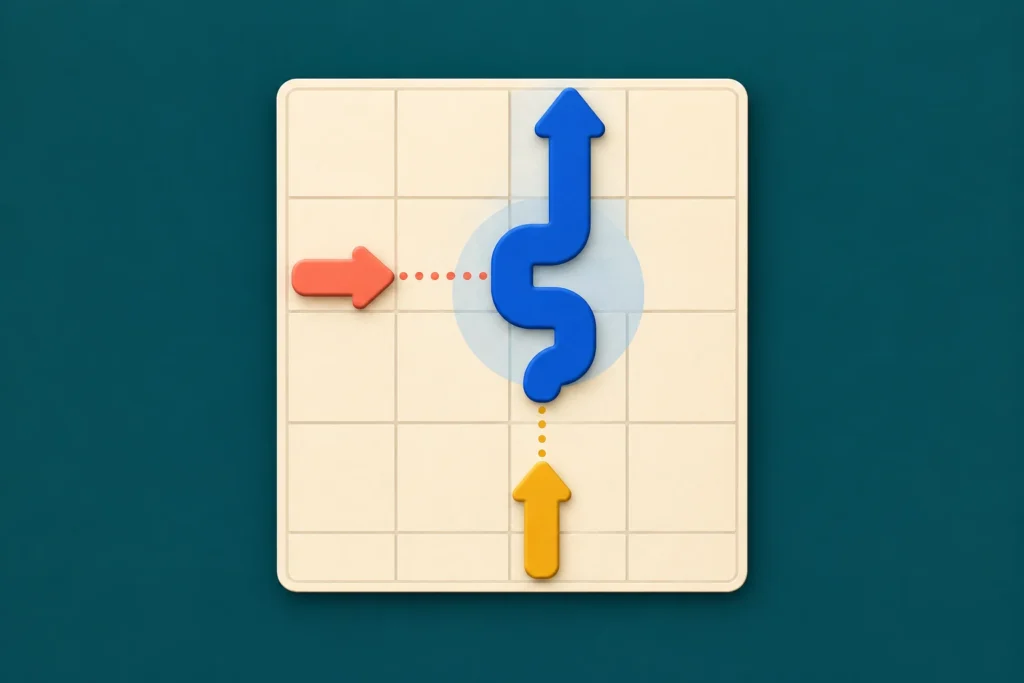
Start with the blocked arrow’s tip. Trace a straight line from the arrowhead in the direction it points, all the way toward the edge of the board. Any other piece crossing that route prevents the arrow from leaving.
For example, imagine a blue arrow pointing right. The space next to its tip is empty, but a section of a red piece crosses the route farther to the right. The blue arrow is blocked, even though the red arrowhead may be somewhere else on the board.
Follow the red line to its own arrowhead. If that arrow points upward, check its path upward—not the direction of the section blocking blue. If red’s route is clear, you can remove it and then inspect blue’s path again.
Getting the direction right is the first step in identifying blocking arrows. The beginner’s guide to reading arrow directions explains how to read winding pieces.
Identifying Important Blockers
Some pieces are useful to notice because they cross more than one arrow’s path. Removing one of these pieces may create several new opportunities to inspect.
Suppose a long green piece crosses the route of a left-pointing arrow near the top and an upward-pointing arrow near the bottom. Find the green piece’s tip and check its own route. If it is clear, removing green gives you two places to look next.
Neither waiting arrow is guaranteed to be free. The top arrow may have another blocker farther along its path, while the bottom arrow may now be clear. Check each route separately.
If green is blocked, don’t assume it has to be your next move. Find the piece in its way or scan another part of the board for an arrow that can leave. When blocked areas are hard to distinguish, these tips for solving crowded arrow puzzle boards can help you organize your search.
Understanding Multiple Blocking Relationships
Complicated boards can contain more than one kind of relationship at the same time. A single arrow might have two blockers, and one of those blockers might itself be waiting for a third piece.
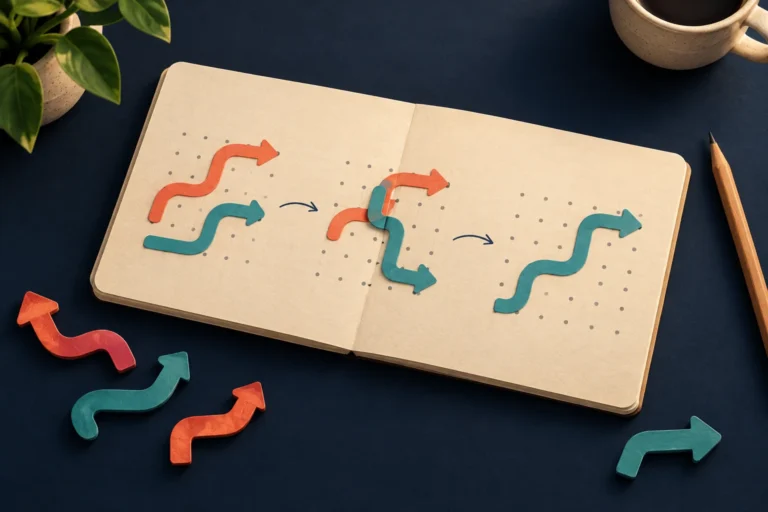
Imagine a yellow arrow with blue and red pieces crossing its route. Blue has a clear path, but red is blocked by green. One possible approach is to remove blue, check whether green can leave, and then revisit red. After red is gone, inspect yellow’s complete path again.
That’s a possible sequence, not a guaranteed solution. Green may have another blocker, and there may be other clear arrows elsewhere. The point is to notice which relationships you can verify rather than tapping through the chain.
It also helps to look at the board as a whole. A piece that appears unrelated to your chosen area may stretch across an important route. For more examples of dependencies, read why move order matters in Amaze Go puzzles.
Finding Opportunities to Clear a Path
Once you’ve identified a blocker, look for an available move that could remove it or help you work toward it. Check the blocker’s arrowhead and trace its full path. If it is clear, you have a move you can make without guessing.
Before selecting it, make a small prediction: “This piece crosses the lower arrow’s path, so I’ll check that path after it leaves.” Then compare the updated board with what you expected. If the lower arrow is still blocked, identify the remaining piece rather than selecting it immediately.
If you can’t find a clear move in that chain, shift your attention to another area. A different arrow may be available even if it doesn’t immediately open the path you’re watching. Every arrow needs to leave eventually, so a clear move is still useful.
For a calmer approach to choosing moves, see how to approach difficult puzzle levels without guessing.
Practical Ways to Read Complicated Boards
When a board feels overwhelming, use this short routine:
- Scan the whole board. Notice open areas, crowded sections, and arrowheads near the edges.
- Focus on one section. Pick an arrowhead and trace its full path, even if the route crosses into another section.
- Find the blocker’s tip. Follow the crossing piece to its arrowhead and check the direction it points.
- Consider a short sequence. Look for a clear piece that may open the route you want to inspect next.
- Recheck after every move. Look for additional blockers and any newly opened paths.
If the lines are difficult to see, zoom in with the game’s controls. Use Pan mode to drag around a larger board, and zoom back out when you need to see the bigger picture. A careful look can prevent the kinds of rushed selections covered in common arrow puzzle mistakes.
Recognizing blocking patterns in arrow puzzles becomes more familiar with practice. Play Amaze Go and try following one blocker at a time. For more help, explore the Amaze Go guides or browse the Where to Play page for additional resources.

Comments (0)