
A difficult puzzle can make random tapping feel tempting. You’ve looked at the board, seen a tangle of arrows, and can’t tell which one should move first. But guessing at a blocked arrow can cost a chance without getting you any closer to understanding the puzzle.
A calmer approach starts with what you can see. Check the board, find a move you can verify, and use the result to decide where to look next. You don’t need to know the whole solution before you begin.
Start with a Careful Board Inspection
Before choosing an arrow, take a moment to look at the entire board. Notice where pieces are tightly packed and where you can see more open space. Find a few arrowheads and note which direction each one points.
An arrow’s line may wind across the board, but its tip tells you which direction to check. If a piece bends upward and its arrowhead points left, look to the left of the tip. The beginner’s guide to reading arrow directions can help if the shapes are confusing.
On a busy board, inspect one area at a time without forgetting the rest. An arrowhead may be in one section while its path or blocking piece extends into another. If you can’t see a crossing clearly, zoom in or use Pan mode to inspect a different part of the board.
Find Arrows That Can Move First
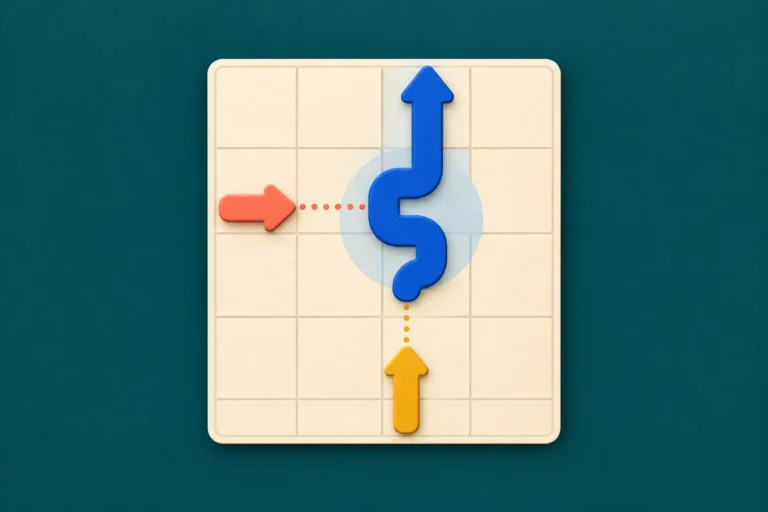
Once you’ve scanned the board, look for an arrow whose path you can check with confidence. Start at its arrowhead and trace a straight line in the direction it points, all the way toward the edge. If another piece crosses that route, the arrow is blocked.
Arrows near the outside can be useful starting points because their paths toward the edge may be easier to see. For example, a right-pointing arrow near the right edge might have a short route to inspect. Still, check the entire route rather than assuming it’s open.
If you find two clear arrows, consider what each piece is blocking. One may cross the path of another arrow and give you a useful route to revisit after it leaves. The other is still a valid move; it may simply be less obvious where to look next.
For more help getting started, read how to find the first move in a difficult level.
Identify the Main Obstacles
A blocker is any piece crossing the path straight ahead of an arrowhead. On difficult arrow puzzle levels, the blocker may be a small section of a long, winding arrow whose tip is somewhere else.
Imagine an upward-pointing arrow with a line crossing its route. Follow that line to find the arrowhead it belongs to. If the blocking piece points left, check its path to the left. If that path is clear, removing the piece may open the upward route.
Some pieces block more than one arrow. Noticing them can help you focus on a useful area of the board. But don’t keep selecting a blocker if its own path isn’t clear. Look for the piece in its way, or scan another section for an available move.
After removing a blocker, check the original route again. Another piece may still be in the way. The guide to solving crowded arrow puzzle boards offers more ways to untangle busy areas.
Consider Different Move Sequences
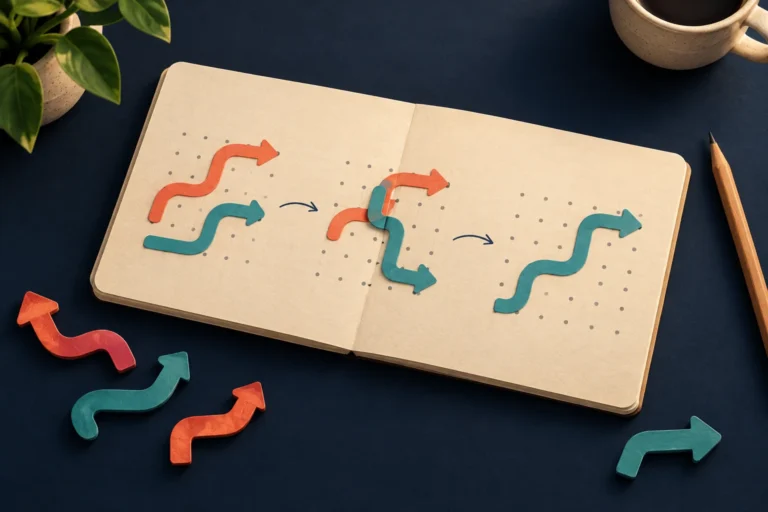
Planning puzzle moves doesn’t require a perfect plan for the whole level. A short sequence is often enough: identify a clear piece, notice which path it may open, and decide what you’ll inspect after it leaves.
For example, suppose two pieces are available. The first crosses the route of an arrow in the center. The second is on the edge and doesn’t appear to block a nearby route. You might remove the first piece, then check the center arrow. If the center path is still blocked, look for the remaining obstacle instead of assuming your plan has failed.
You could also remove the edge piece first. Every arrow needs to leave eventually, so a successful move isn’t automatically wasted just because it doesn’t open an obvious path. Choosing a move with a clear purpose can simply make the board easier to follow.
There may be several sensible orders. For more examples of comparing them, see why move order matters in Amaze Go puzzles.
Recheck the Board After Each Move
Removing one arrow changes the board. Because a winding piece can stretch across several areas, its removal may open a route far from its arrowhead. An arrow that was blocked earlier might now be available.
After each move, look at the spaces the piece occupied. Check any arrowheads that were pointing toward those spaces, then trace their full paths before selecting them. If the route remains blocked, find the next piece in the way.
It also helps to revisit your first impressions. You may have decided that one side was too crowded, but a few removals could make it easier to read. Solving puzzles without guessing means using the current board, not relying on how it looked several moves ago.
If you find yourself rushing or repeatedly selecting blocked arrows, review these common arrow puzzle mistakes.
When to Restart and Try a Different Approach
Restarting can be helpful if you’ve lost several chances through blocked selections and want a fresh attempt. Before you do, pause and consider what went wrong. Did you overlook a distant crossing? Did you misread an arrowhead? Choose one thing to check more carefully next time.
The Restart button below the game reloads it, and the game asks for confirmation because current level progress may be lost. You don’t need to restart just because a clear move didn’t reveal an obvious next step. Every arrow must eventually leave, so take another look around the remaining board first.
On your next attempt, try a more organized scan. You might begin at a different edge, inspect one section at a time, or compare two clear arrows before choosing. The goal is not to force a new sequence, but to make decisions you can explain.
For a refresher on controls, visit How to Play Amaze Go. You can also explore the Amaze Go guides or browse the Where to Play page for more resources. Then play Amaze Go and take the next difficult board one checked move at a time.
Comments (0)