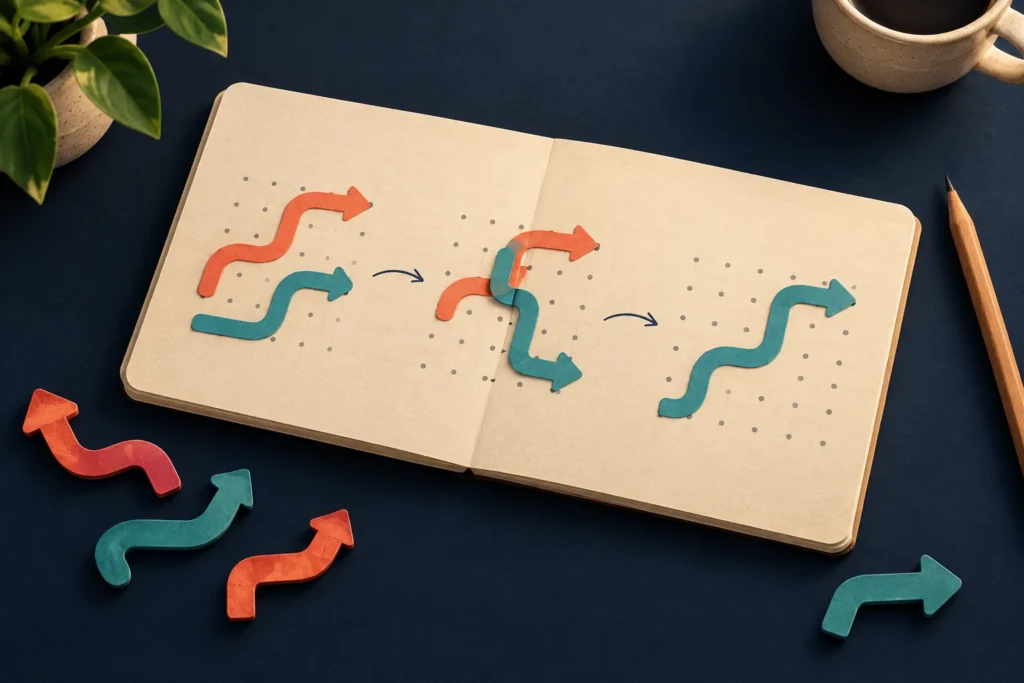
A puzzle game gives you a small challenge: look at what’s in front of you, figure out what can move, and decide what to try next. In an arrow puzzle, that challenge might be as simple as finding one clear path—or as tricky as working out which piece is blocking several others.
Games like Amaze Go offer a chance to practice useful puzzle-solving habits, including observation, planning, and learning from mistakes. You don’t need to be an expert to start. The key is to slow down enough to understand each decision.
Why Puzzle Games Require Logical Thinking
Logical thinking puzzles ask you to use the rules to make decisions rather than rely on guesses. In Amaze Go, for example, an arrow can leave when the path straight ahead of its arrowhead is clear. If another piece is in the way, you need to look for a different move first.
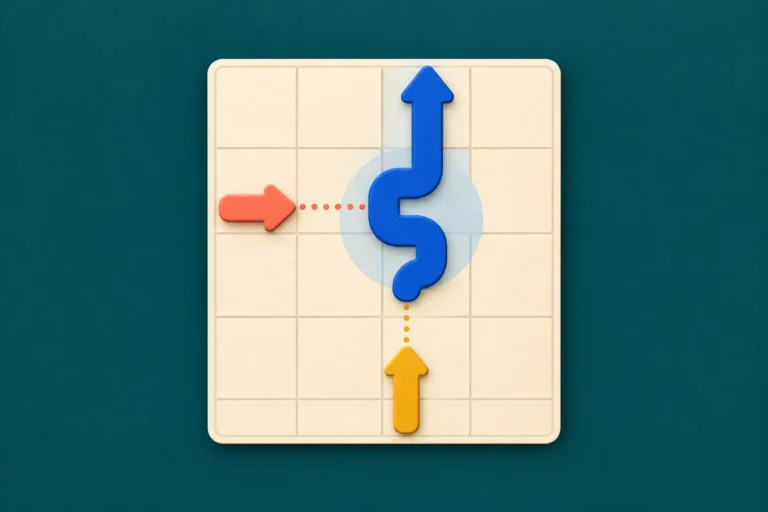
Imagine an arrow pointing left. You notice that another piece crosses its path, so you know the arrow cannot leave yet. Instead of tapping it anyway, you look for the arrowhead belonging to the blocking piece and check whether that piece can move.
That simple process—notice a problem, use the rule, and consider an alternative—is a practical way to approach the board. If you’re new to the game, the Amaze Go rules and controls explain the basics.
Learning to Observe Before Acting
When a level opens, take a moment to look at the whole board. Notice where the pieces are crowded and where there is more open space. Look for arrowheads near the edges, but don’t assume an arrow can move just because it’s close to an edge.
Next, choose one arrow and trace a straight line from its tip in the direction it points. Check all the way toward the edge for any piece crossing that route. A gap immediately in front of the arrowhead can be misleading if a blocker sits farther away.
For example, a downward-pointing arrow might look clear at first. A wider look could reveal that a long piece crosses its path near the bottom of the board. Spotting that line before you tap helps you avoid a blocked move, which costs a chance.
If the board is hard to read, break it into smaller areas and inspect them one at a time. The guide to solving crowded arrow puzzle boards explains how to do this without losing sight of paths that extend across the board.
Planning More Than One Move Ahead
Planning puzzle moves doesn’t mean predicting the solution to an entire level. Often, it’s enough to ask: “If I remove this piece, what should I check next?”
Suppose two arrows have clear paths. One crosses the route of a third arrow, while the other doesn’t appear to block anything nearby. Removing the first piece may make the third arrow available. The other clear move is still valid, but choosing the blocker gives you a useful place to look next.
After you make the move, check the third arrow’s full path again. Another piece may still be in the way. A plan is a helpful expectation, not a guarantee.
This kind of short planning can make Amaze Go puzzles easier to follow. For more examples, read why move order matters in Amaze Go puzzles.
Recognizing Patterns and Relationships
As you play, you may start to notice familiar relationships between pieces. One arrow may be blocked by a second piece, which is blocked by a third. Another piece may cross the paths of several arrows at once.
These patterns give you clues about where to look. If one winding piece is blocking two routes, finding its arrowhead and checking its own path could help you make progress in both areas. If it is blocked too, follow the next piece and see whether you can find a clear move.
Direction is part of the pattern. A piece can bend around the board, but its arrowhead tells you which way to check. If you’re still getting used to the shapes, the beginner’s guide to reading arrow directions can help.
Familiar patterns are useful starting points, not shortcuts around checking. Each board is different, so confirm that a path is clear before selecting an arrow.
Learning from Mistakes
A blocked move can be frustrating, especially when you thought the route was open. Instead of immediately trying another arrow, pause and look at what you missed.
Did you check the wrong direction? Did a line cross the route farther from the arrowhead? Or did you assume that removing one blocker had cleared the whole path?
For example, if you selected a right-pointing arrow without noticing a piece near the right edge, trace the route again and find that blocker. On your next attempt, make a point of checking all the way to the edge before selecting an arrow.
You can also review a successful move. Notice which paths opened and whether your expectation was correct. Both kinds of review can help you become more familiar with the puzzle’s rules and patterns.
For more situations to watch for, explore common mistakes in arrow puzzle games.
Developing a Consistent Puzzle-Solving Approach
A simple routine can help you put these puzzle-solving techniques into practice. Try the following steps whenever you start a board or feel unsure about your next move:
- Survey the board. Notice crowded areas, open spaces, and arrowheads that are easy to see.
- Choose one arrow to inspect. Find its arrowhead and identify the direction it points.
- Check the complete path. Trace a straight line from the tip toward the edge and look for crossing pieces.
- Consider what the piece blocks. If its path is clear, notice whether removing it might open another route.
- Make the move and reassess. After the arrow leaves, check the changed board rather than assuming your next move is ready.
- Review when you’re stuck. Look for a blocker you may have missed, inspect another area, or zoom in for a closer view.
There’s no need to rush through the list. With practice, the steps can become a comfortable way to approach a new board.
Ready to try? Play Amaze Go and focus on making one well-checked decision at a time. You can also explore the Amaze Go guides or browse the Where to Play page for more resources.

Comments (0)